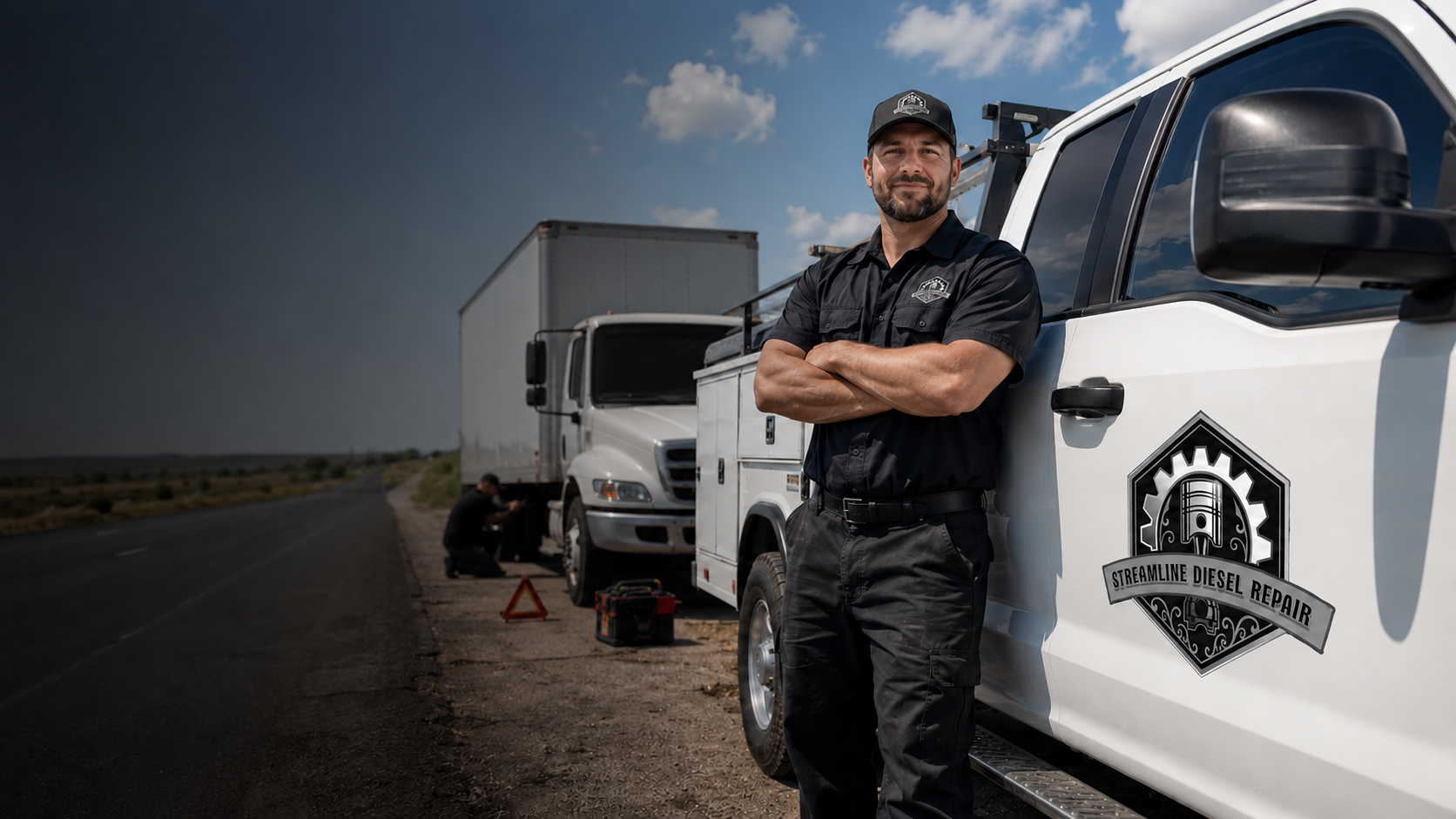
You’re on the road and something feels off. Now you’ve got a decision to make: call for roadside assistance, or push through to the shop?
Getting that call wrong costs you time and money, and in some cases, it can turn a minor fix into a major repair. Here’s how to read the situation and make the right choice every time.
When to Stay Put and Call for Roadside Help
Some problems shouldn’t move. If you’re experiencing any of the following, shut it down and call for help immediately:
-
Brake failure or significant brake fade. If your stopping power is compromised, you’re a hazard to yourself and everyone else on the road. Don’t drive it anywhere. A truck without reliable brakes is an out-of-service vehicle, period.
-
Tire blowout or severe sidewall damage. A spare swap on a steer tire is one thing. But if the rim is damaged, the axle is involved, or you’re loaded heavy, get a technician to the truck. Driving on a compromised tire assembly causes cascading damage to the wheel end and suspension.
-
Coolant loss with temperature warnings. Driving an overheating engine, even a short distance, can warp heads and crack blocks. The repair bill goes from hundreds to thousands fast. If your temperature gauge is climbing and you’re losing coolant, pull over immediately.
-
Loss of air pressure (air brake systems). No air, no brakes. Full stop. Your spring brakes will set, and even if you can release them, you have no service brakes to stop the truck safely.
-
Fuel or fluid leaks near heat sources. This is a fire risk. Get off the road, get clear of the truck, and call it in. Diesel near a hot turbo or exhaust manifold is not something to gamble on.
-
Electrical smoke or burning smell. Don’t try to diagnose it on the side of the road. Don’t keep driving. Electrical fires can spread fast and are difficult to contain without the right equipment.
-
Stuck or seized steering. If the wheels aren’t responding predictably, the truck doesn’t move. A failing power steering pump or a seized component makes you a danger to every vehicle around you.
The rule of thumb: if continued driving could cause injury, cause a collision, or turn a repairable problem into an engine rebuild, stay put and call for roadside service.
When It’s Okay to Drive It to the Shop
Not every warning light is an emergency. Some issues are worth monitoring on a short drive to get a proper diagnosis in the bay:
-
Check engine light with no other symptoms. Could be a sensor, a loose gas cap, or an emissions code. Get it read, but it’s not always urgent. If the truck is running normally with no loss of power and no strange sounds, a short drive to the shop is fine.
-
Minor fluid seep (not a gush). A slow drip that’s been building over time can usually make a short trip. Just check your levels first. If you’re topping off daily, schedule it soon. If it’s a small weep, you’ve got time to plan the repair.
-
Worn brakes with normal stopping function. If you’re hearing squeal or light grinding but the truck is stopping normally, you’ve got some time, but don’t push it. Get it into the shop within a day or two before it becomes a rotor or drum replacement.
-
HVAC or comfort system issues. A/C out, heat not working, defroster failing. Inconvenient, not dangerous. The exception is a defroster failure in low visibility conditions. Use judgment, but in most Florida weather, this can wait for a scheduled visit.
-
Non-structural body damage. Cosmetic dents, a loose step, a damaged mirror. Come in when it’s convenient. These don’t affect drivability or safety in most cases.
The Grey Zone: When You’re Not Sure, Call Us First
When you’re between “it’s fine” and “this is bad,” don’t guess. Call. A two-minute phone call can tell you whether what you’re describing is driveable or not. That’s a free call, and it beats guessing wrong and adding thousands to the repair bill.
Inland Truck Repair now offers roadside service, so if you’re stuck in the Orlando or Central Florida area, we can come to you. Whether it’s a roadside repair on the spot or a tow back to the shop for a bigger fix, you don’t have to figure it out alone.
Our mobile technicians carry the tools and parts to handle many common breakdowns right where you are: tire changes, air leak repairs, belt replacements, jump starts, and basic electrical diagnosis. If it needs more than a field repair, we’ll coordinate getting the truck back to our shop so nothing falls through the cracks.
Roadside and Shop Repair in Orlando & Central Florida
Inland Truck Repair serves owner-operators and fleets across Central Florida, from Kissimmee and Sanford to Daytona Beach and Lakeland. Whether you need a mobile technician dispatched to your location or want to bring it into our shop at 3210 Friendly Ave in Orlando, we’ll get your truck back on the road.
If there’s any doubt about safety, don’t drive it. Trucks are repairable. Accidents aren’t always. When in doubt, call us and we’ll help you make the right call.
Need Roadside Help or Want to Schedule a Repair?
Stuck on the road or ready to bring it in? We'll help you make the right call. Roadside service available in the Orlando and Central Florida area.